loading...
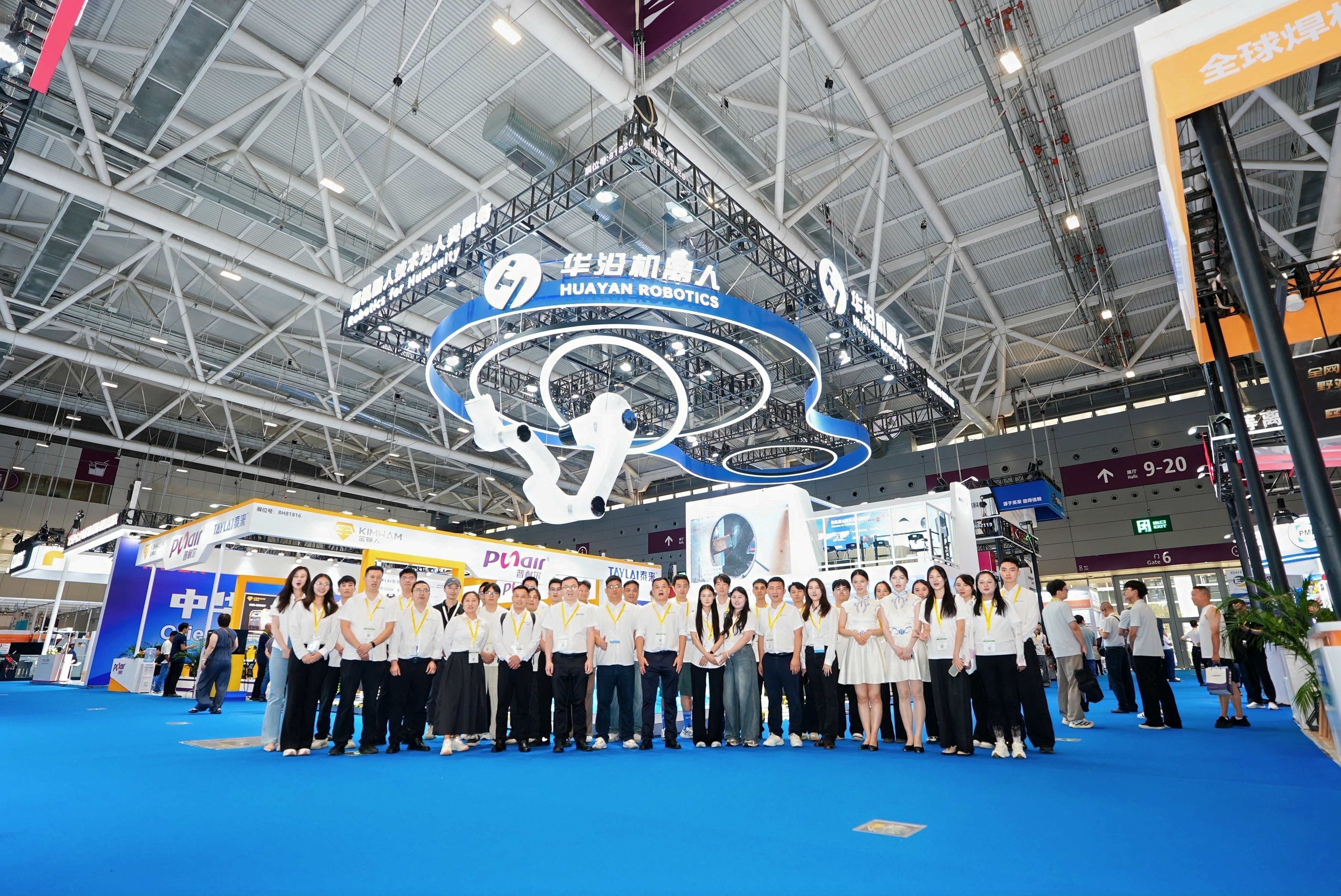
On June 29, the 29th Beijing Essen Welding & Cutting Exhibition opened at the Shenzhen World Exhibition & Convention Center (Bao’an) and ran for four days. Huayan Robotics (Booth 81820, Hall 8H), a leading player in China’s collaborative welding robotics sector, showcased its flexible welding solutions under the theme ”Full-Scenario Coverage · Full-Chain Collaboration.” The presentation highlighted a shift from single-machine replacement to system-level coordination across industries and ecosystem partners.
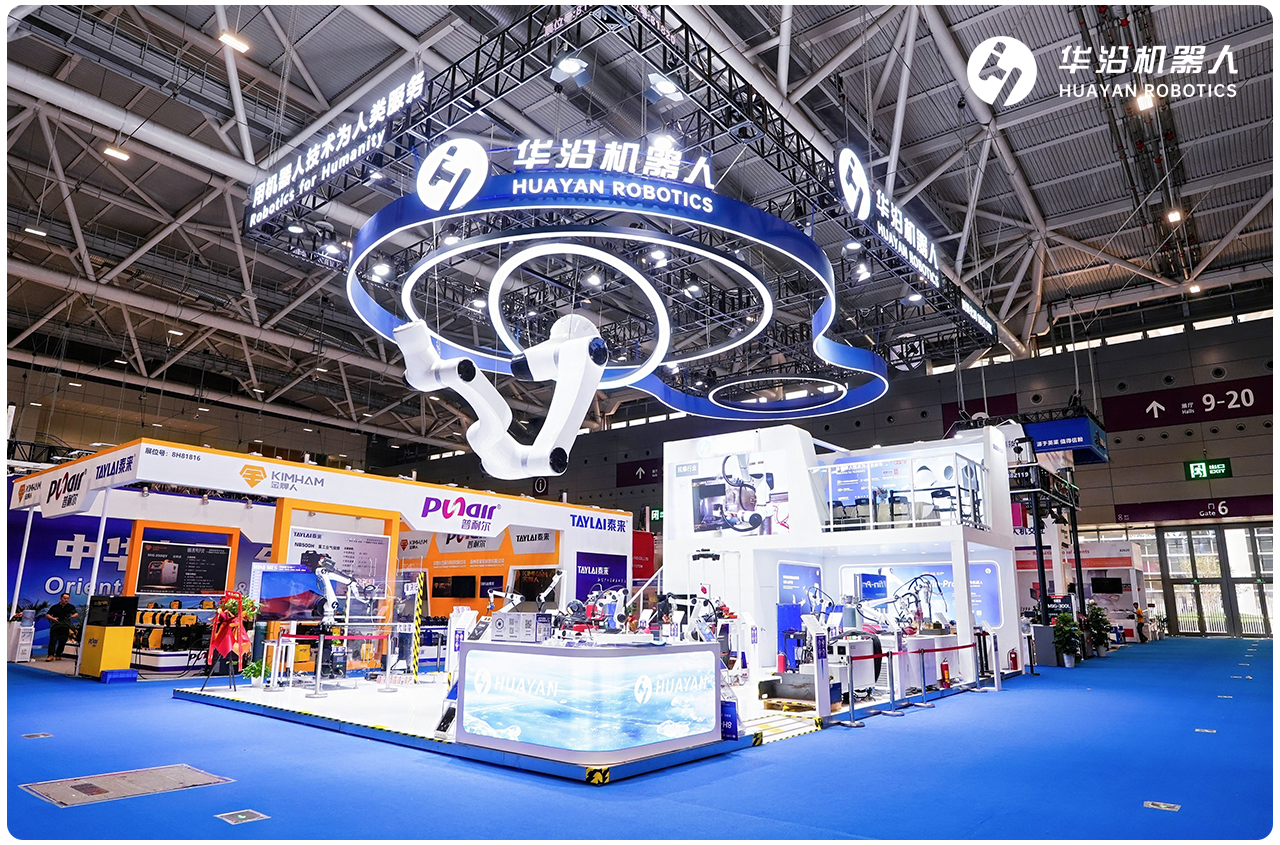
Full-Scenario Coverage Empowering Key Industries
In the field of welding automation, Huayan Robotics has served industries including shipbuilding, structural steel construction, bridge engineering, machinery manufacturing, pipeline systems, and hardware processing, accumulating extensive real-world application experience. Facing highly differentiated requirements and complex operational environments, the company continues to adopt a scenario-driven R&D approach, delivering welding automation capabilities tailored to actual production processes.
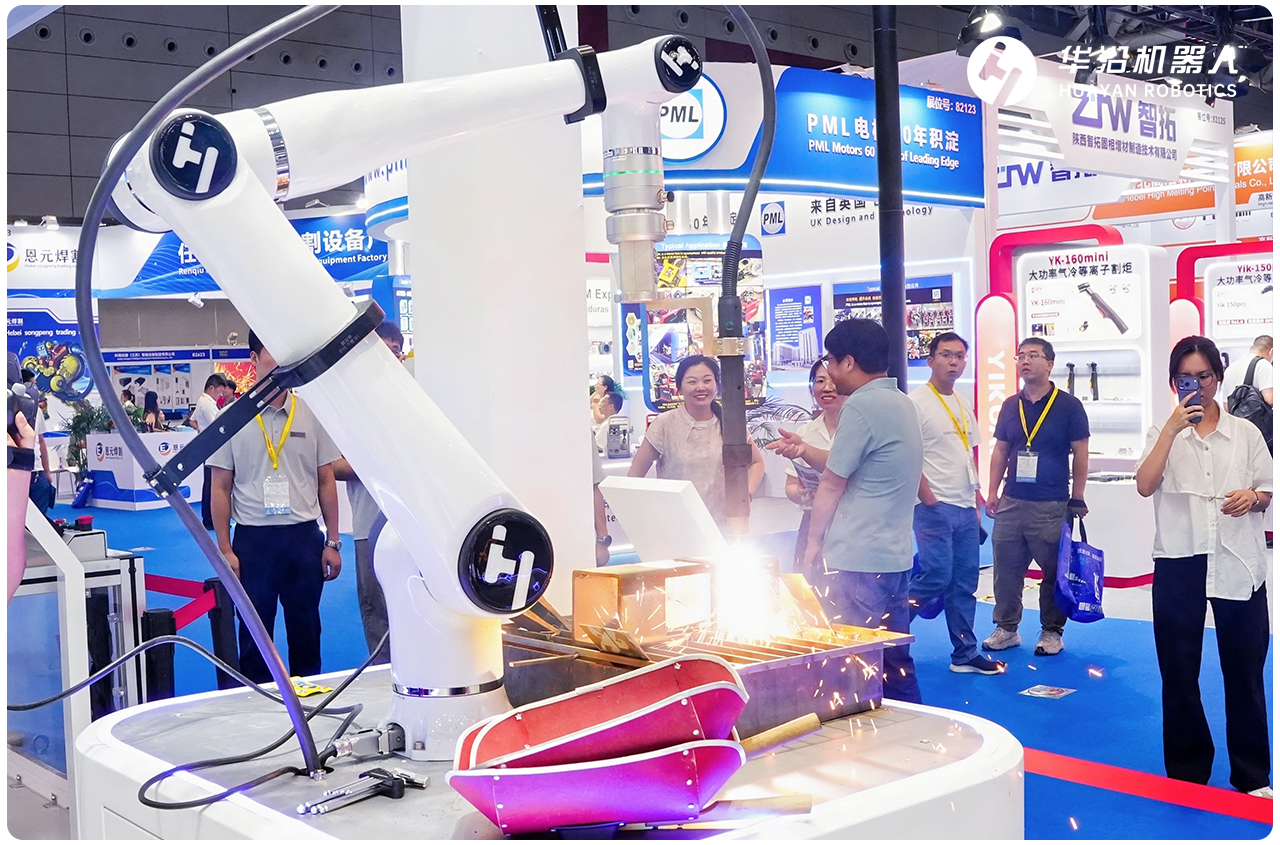
Taking shipbuilding as an example, Huayan Robotics showcased its newly developed mobile welding solution. The solution centers on a collaborative welding robot and integrates key components such as magnetic bases, lifting columns, linear rails, and an MES management system. This modular design enables rapid assembly and full-terrain deployment. It can be relocated across different shipyard work areas—such as hull segmentation zones, outfitting sections, and confined cabins—helping overcome challenges caused by dispersed workstations and highly non-standardized workpieces in shipbuilding automation.
In addition, a 3D vision-based teach-free welding solution based on Huayan Robotics welding robot and extended axes was demonstrated. Using a 3D camera, it automatically identifies weld seam types and generates welding paths without manual teaching or complex programming. It is particularly suitable for large segmented structures and long straight welds, significantly lowering operational barriers.
Full-Chain Collaboration Building a Flexible Welding Ecosystem
Huayan Robotics adheres to an open ecosystem strategy, collaborating with globally welding equipment manufacturers, sensor suppliers, system integrators, and solution partners. Through a “1+X model,” the company co-develops flexible welding solutions for diverse scenarios and advances the collaborative welding robotics ecosystem.
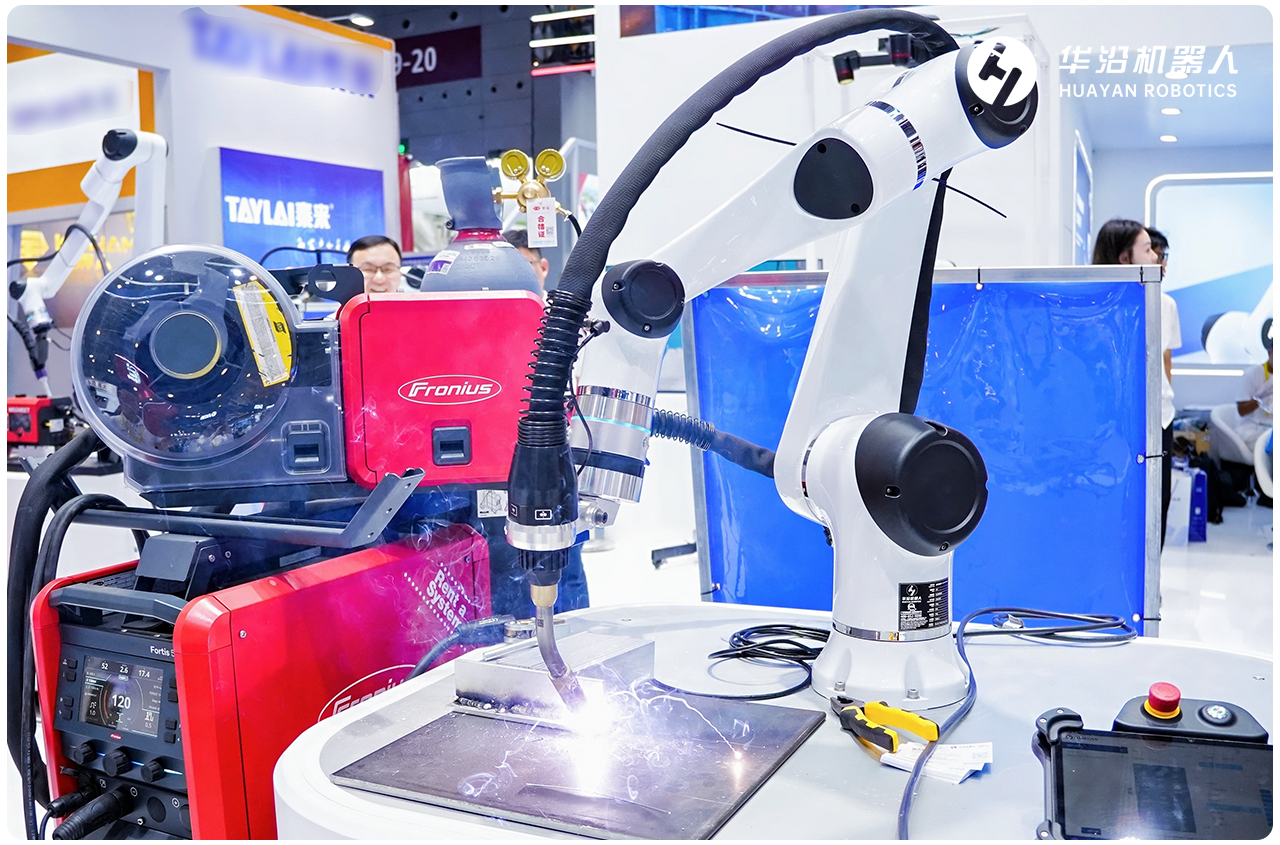
At this exhibition, Huayan Robotics, together with its partners, showcased intelligent flexible welding robot. Leveraging Huayan’s high precision and system stability, it integrates automatic weld recognition with intelligent trajectory planning. It reduces the transition from positioning to welding to 15–20 minutes, achieves over 98.5% straight weld recognition accuracy, and increases welding qualification rates by 20–30%.
A mobile collaborative welding robot cart co-developed with partners was presented. Featuring integrated design, flexible mobility, and rapid deployment, the robot cart leverages Huayan’s lightweight and easy-to-use collaborative robot capabilities (drag-to-teach programming and welding process packages). It adapts to irregular workpieces and small-part fillet welding, enabling the principle that “where the workpiece is, the welding station follows.”
In collaboration with partners such as Keyence, Huayan Robotics also showcased additional welding applications and solutions. On the opening day, an expert delegation organized by local Welding Association visited the booth to discuss industry collaboration and development.
From standalone systems to integrated solutions, and from core components to complete machine integration, Huayan Robotics continues to work with industry partners to advance welding automation toward a more flexible and open ecosystem.
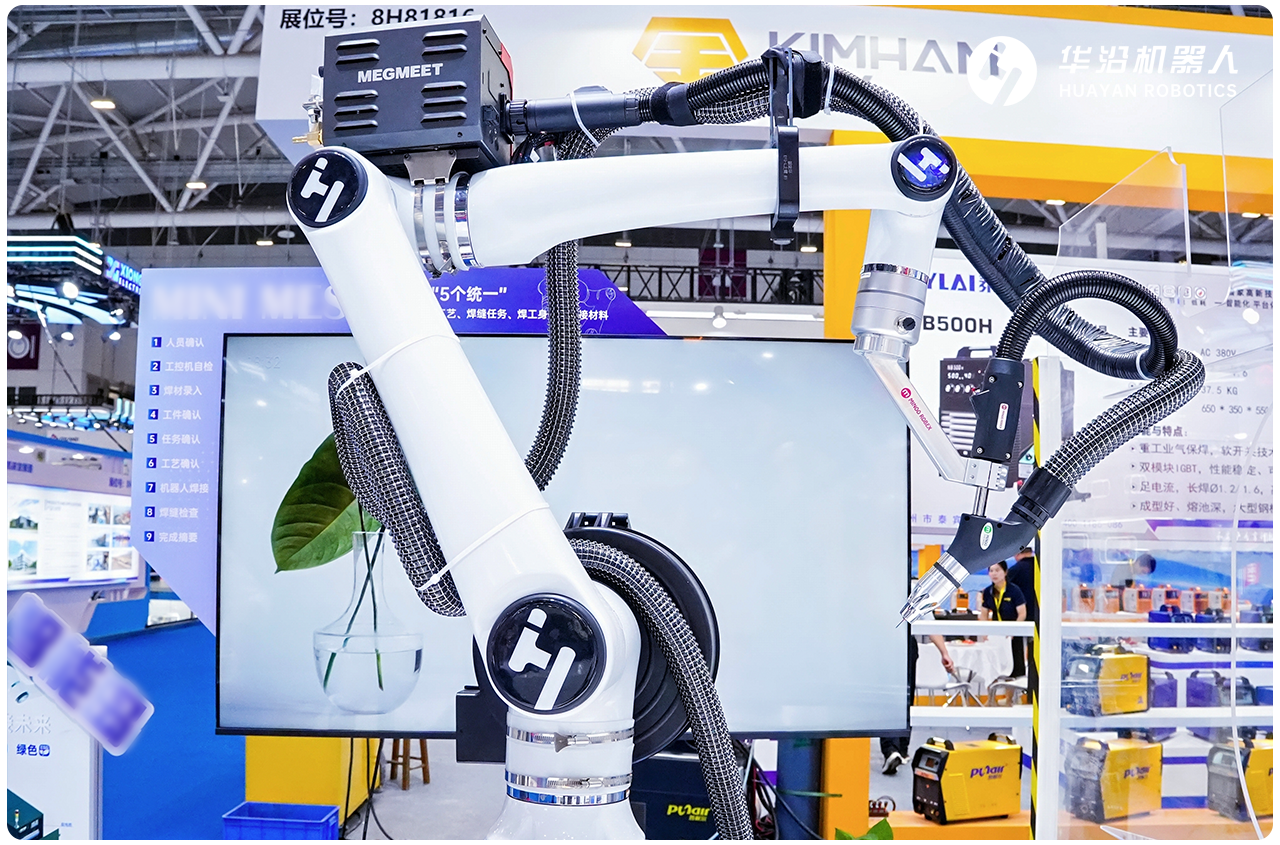
Product Portfolio Delivering Comprehensive Welding Capabilities
At this year’s Essen Exhibition, Huayan Robotics presented a complete product portfolio ranging from lightweight portable systems to long-reach configurations, and from basic welding to advanced processes, demonstrating comprehensive capabilities in flexible and precision welding.
Portable welding robots (with magnetic bases) based on the E03-Pro and E05-Pro platforms support single-operator deployment and are suitable for confined spaces and mobile applications. The 1.3-meter standard welding robot integrates with seventh-axis systems and positioners, covering most conventional workstations. The 1.8-meter E12-Pro is designed for large workpieces, weighing only one-third of comparable industrial robots while combining industrial-grade precision with collaborative flexibility and safety.
In terms of welding process expansion, Huayan Robotics demonstrated multiple core capabilities. Equipped with laser seam tracking, weld positions can be detected in real time and deviations automatically corrected, ensuring welding consistency under complex operating conditions. Multi-layer and multi-pass welding supports rapid parameter configuration, combined with arc and vision tracking to improve thick-plate welding efficiency. Plasma cutting supports offline and drag-and-drop programming for stable cutting paths and clean edges. The collaborative robot with handheld laser welding enables multi-function applications including welding, cutting, and rust removal.
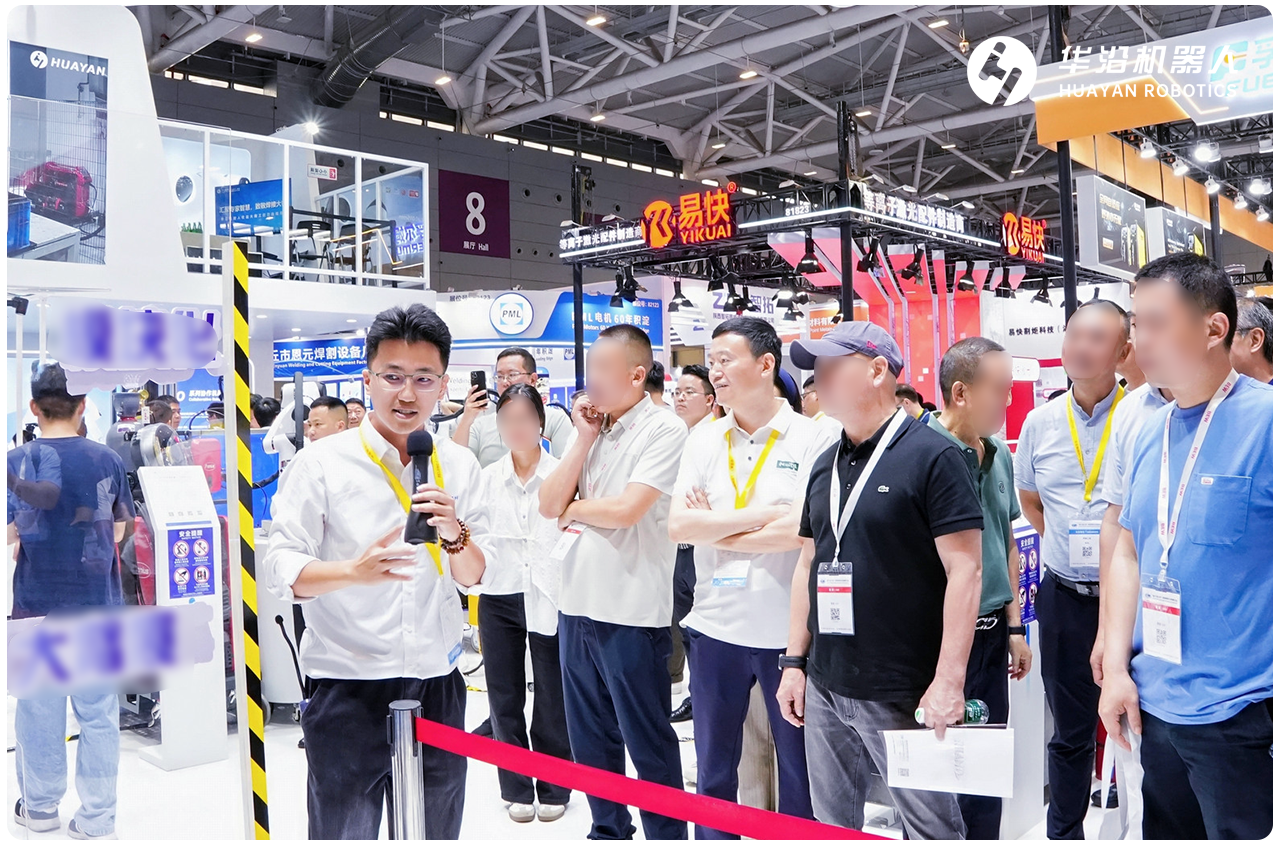
During the exhibition, Huayan Robotics booth attracted significant visitor traffic, with live demonstrations of drag-to-teach programming and 3D teach-free welding drawing strong attention. Industry media, experts, and enterprise representatives engaged in discussions and showed strong interest in its real-world applications.
Looking ahead, Huayan Robotics will continue to focus on embodied intelligence, welding automation, and flexible manufacturing. Centered on intelligent robotics, the company will expand the boundaries of teach-free systems and intelligent trajectory planning technologies. By strengthening industrial chain collaboration, it aims to shift welding automation from single-machine replacement toward system-level coordination, enabling manufacturers to achieve greater flexibility and intelligence, and positioning welding as a new starting point for smart manufacturing.